01Components we extrude
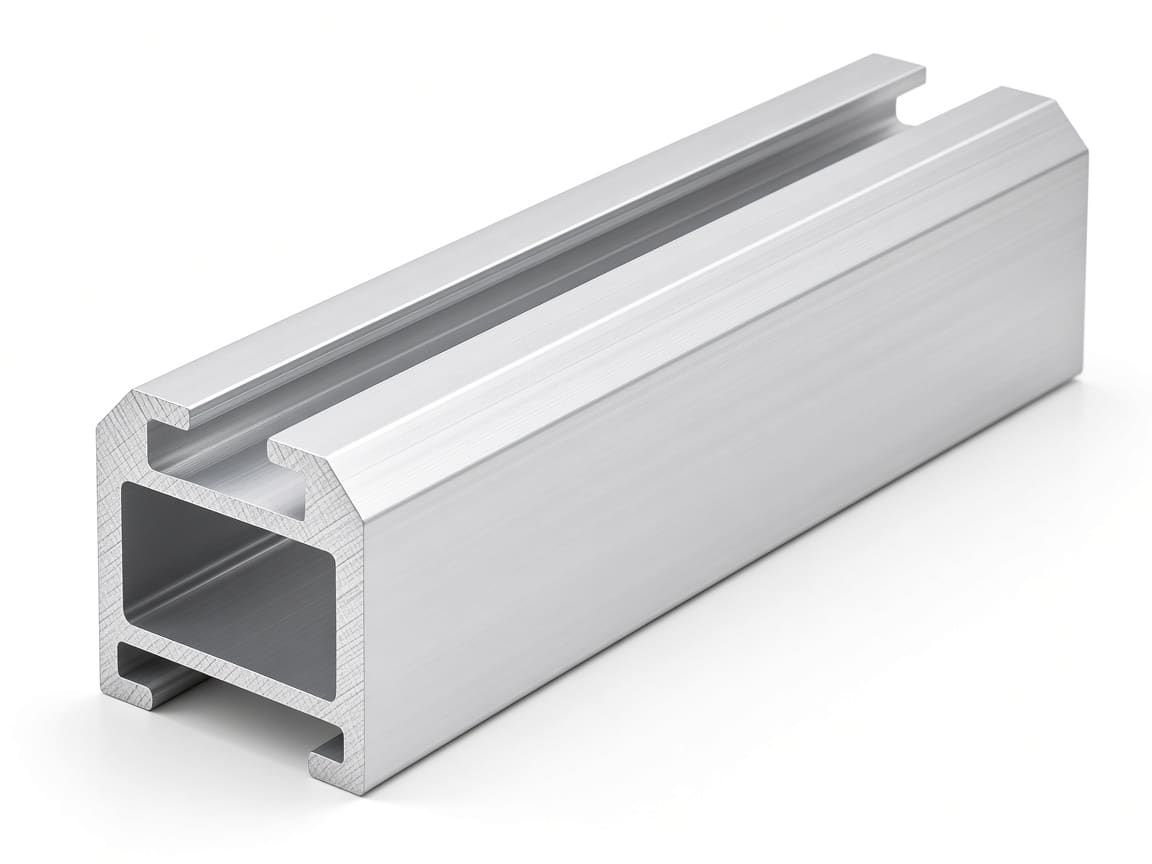
Mounting rails
Main load-carrying rails with top channels for clamp bolts and base slots for feet.
Mid and end clamps
Extruded clamp bodies cut to width — consistent profile, low per-part cost.
Splices
Internal or external sleeves that join rail lengths without losing stiffness.
L-feet and brackets
Roof attachment and tilt brackets cut and punched from extruded angles.
02Alloy and temper for structural loads
Racking rails are sized for wind and snow loads by the system designer. 6005A-T6 offers structural strength with good extrudability for multi-feature rails; 6063-T5 is common for lighter rails, clamps and trims. Every lot ships with material certificates so your engineering calculations rest on documented properties.
03Corrosion and finish
Anodizing is the standard outdoor finish for mounting systems. Thicker anodic layers — typically 15 µm and above — are specified for harsher and coastal environments. Where aluminum meets stainless steel fasteners in wet conditions, isolating washers limit galvanic corrosion.
04Built for project supply
- Cut-to-length and punched parts matched to your bill of materials
- Container-optimized bundling and labelling by component
- Dimensional reports and material certificates per lot
- Repeat orders produced from the same dies and approved samples
System-level certification of the racking remains with the system designer; we supply the material and dimensional documentation it depends on.
05What to send for a quote
The more of this you share, the faster and more accurate the quote. Missing something? Send what you have — we will ask.
- Rail and component drawings
- Alloy and temper
- Anodizing class or thickness
- Lengths and punching details
- Quantities per component
- Packing and container plan
06Frequently asked questions
Which aluminum alloy is used for solar mounting rails?
6005A-T6 (or 6005-T5 in North American specifications) for structural rails, and 6063-T5 for lighter rails and clamps. The choice follows the system's structural calculations.
What anodizing thickness do solar rails need?
Outdoor structures are commonly anodized to 15 µm or more, with thicker classes for coastal and industrial atmospheres. Your specification or the system's certification sets the minimum.
Can you produce rails to our existing racking design?
Yes. Send your rail and component drawings; we review them for manufacturability, make the dies and submit samples for approval before production.
Last updated September 17, 2026 · Reviewed by the CharMax Aluminum engineering team