01Enclosure constructions
One-piece tube body
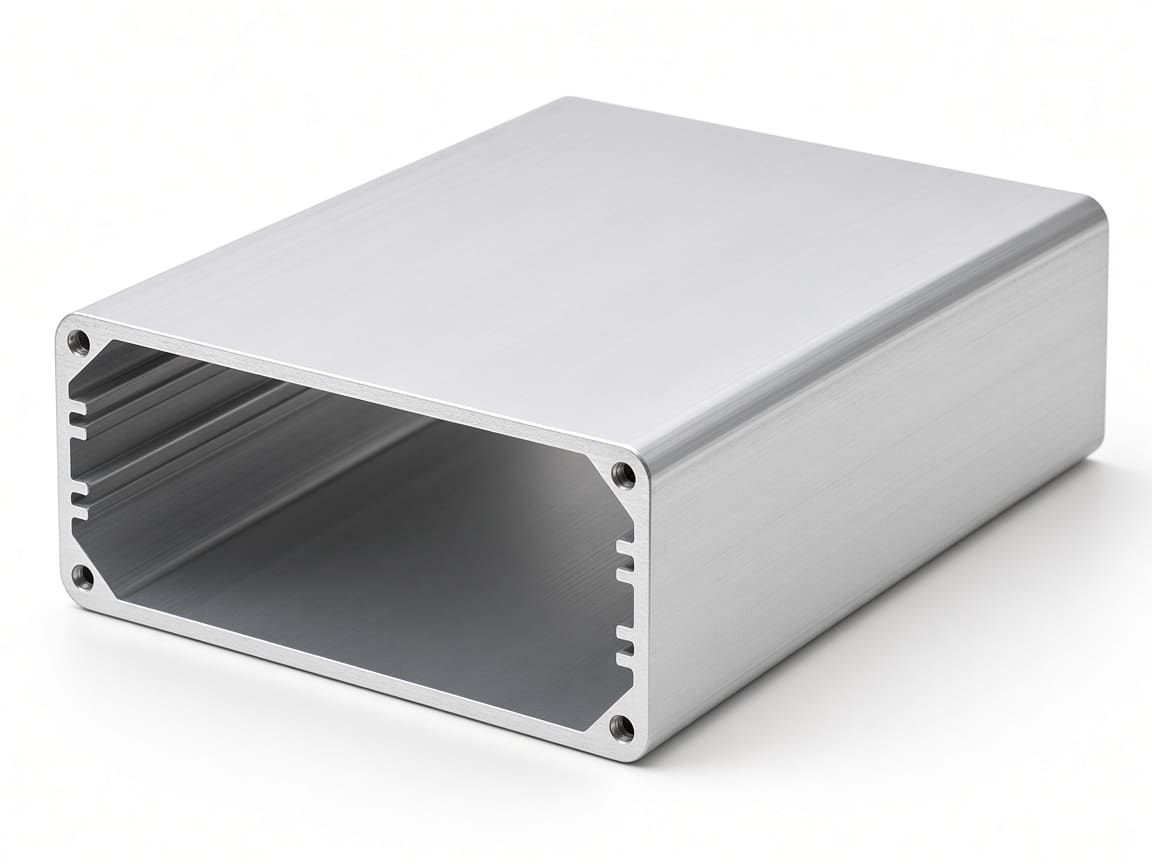
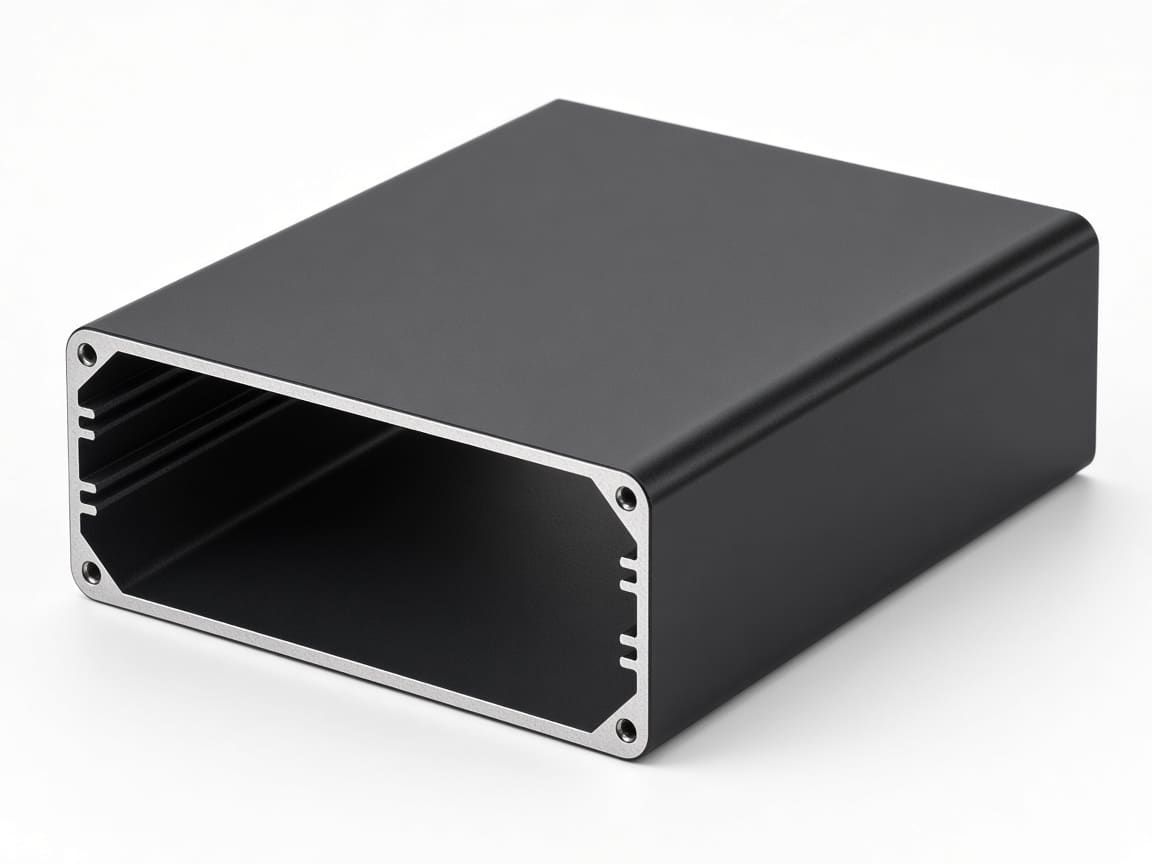
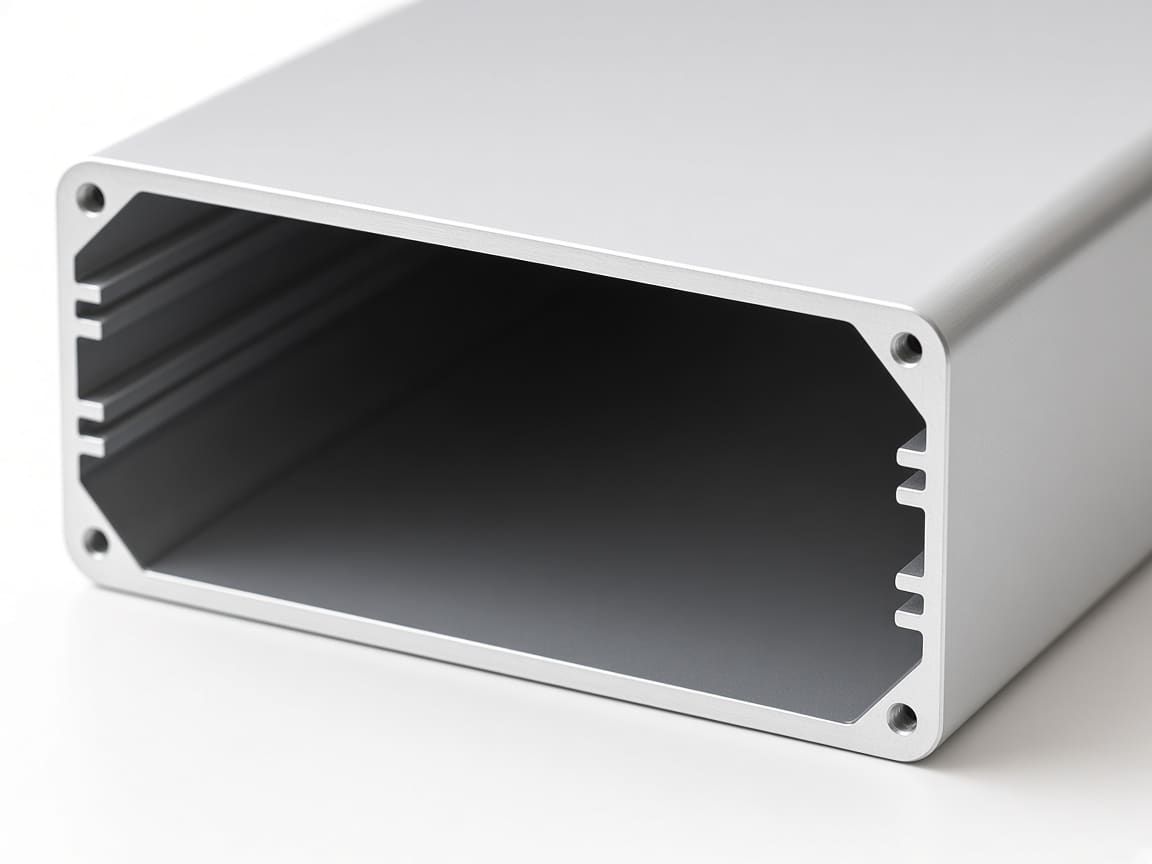
The stiffest option. PCBs slide into guide slots and end plates close the ends with gaskets.
Two-shell (clamshell)
Upper and lower profiles that screw or snap together — easier access for complex internals.
Channel and cover
A U-profile with a flat or sliding lid; economical for simple electronics.
Finned enclosure
External fins turn the housing into the heat sink for power electronics.
02Features you can build into the profile
Anything that runs the full length of the enclosure can be part of the extrusion, which costs nothing per part once the die is made.
- PCB guide slots at one or more board heights
- Screw ports for self-tapping screws that fix the end plates
- Gasket and O-ring grooves for sealed designs
- Mounting flanges, DIN-rail features and wall-mount slots
- External fins for passive cooling
- Label recesses and snap-fit channels for covers
03Sealing, grounding and EMC
Ingress protection is achieved at the joints: end-plate gaskets, groove geometry and screw spacing decide the rating, which must be verified on the complete assembly.
For EMC, remember that anodizing is an electrical insulator. Specify masked contact areas, spot-faced grounding points or a conductive conversion coating where panels must bond electrically.
04End plates and machining
End plates are CNC machined from plate to match the profile, with connector cut-outs, cable glands, display windows and vents machined into the body or plates. Machining happens before finishing so every surface is protected.
05Typical applications
- Power supply boxes and adapter housings
- Industrial controllers and IoT gateways
- Instrumentation and test equipment
- LED drivers
- Battery packs and BMS housings
- Telecom and networking equipment
- Audio and professional AV
06What to send for a quote
The more of this you share, the faster and more accurate the quote. Missing something? Send what you have — we will ask.
- Enclosure cross-section and overall envelope
- PCB thickness and guide positions
- End-plate concept and fastening
- Sealing or IP target
- Alloy, temper and finish (including masked areas)
- Cut length and machining drawing
- Quantity per release and annual volume
07Frequently asked questions
How are extruded aluminum enclosures sealed?
With gaskets or O-rings at the end plates and any longitudinal joints, sitting in grooves designed into the profile. Ratings such as IP65 or IP67 are achievable with the right joint design, but they must be verified by testing the complete assembly.
Can an anodized enclosure be grounded?
Yes, but only where the anodic layer is absent. We mask or spot-face grounding points, or use a conductive conversion coating on surfaces that need electrical contact.
One-piece or two-piece enclosure — which is better?
One-piece bodies are stiffer and seal more easily; two-piece designs are easier to assemble when boards are large or wiring is complex. We can advise once we see your internal layout.
What wall thickness do extruded enclosures use?
Most small and medium enclosures use walls around 1.5–3 mm, set by size, stiffness and the screw ports. Thicker walls are used where the enclosure is also the heat sink.
Last updated September 17, 2026 · Reviewed by the CharMax Aluminum engineering team