01Standard shapes
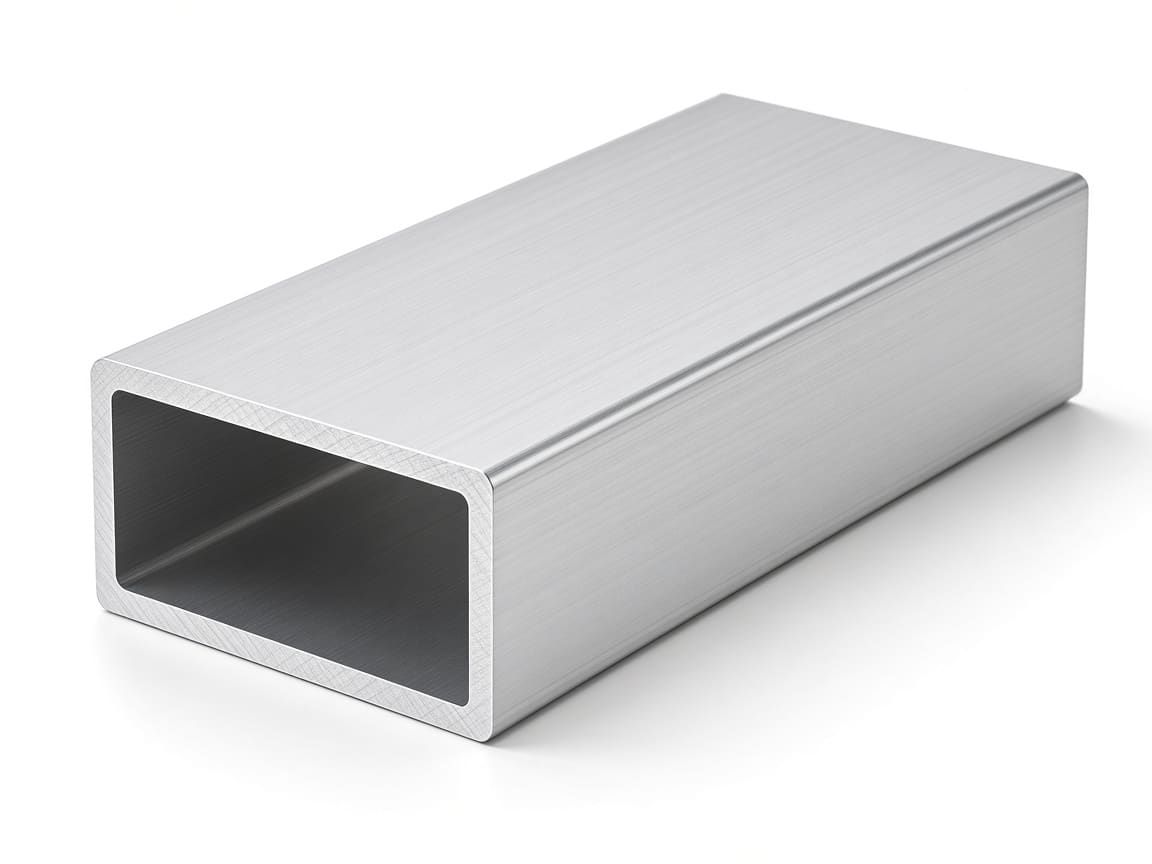
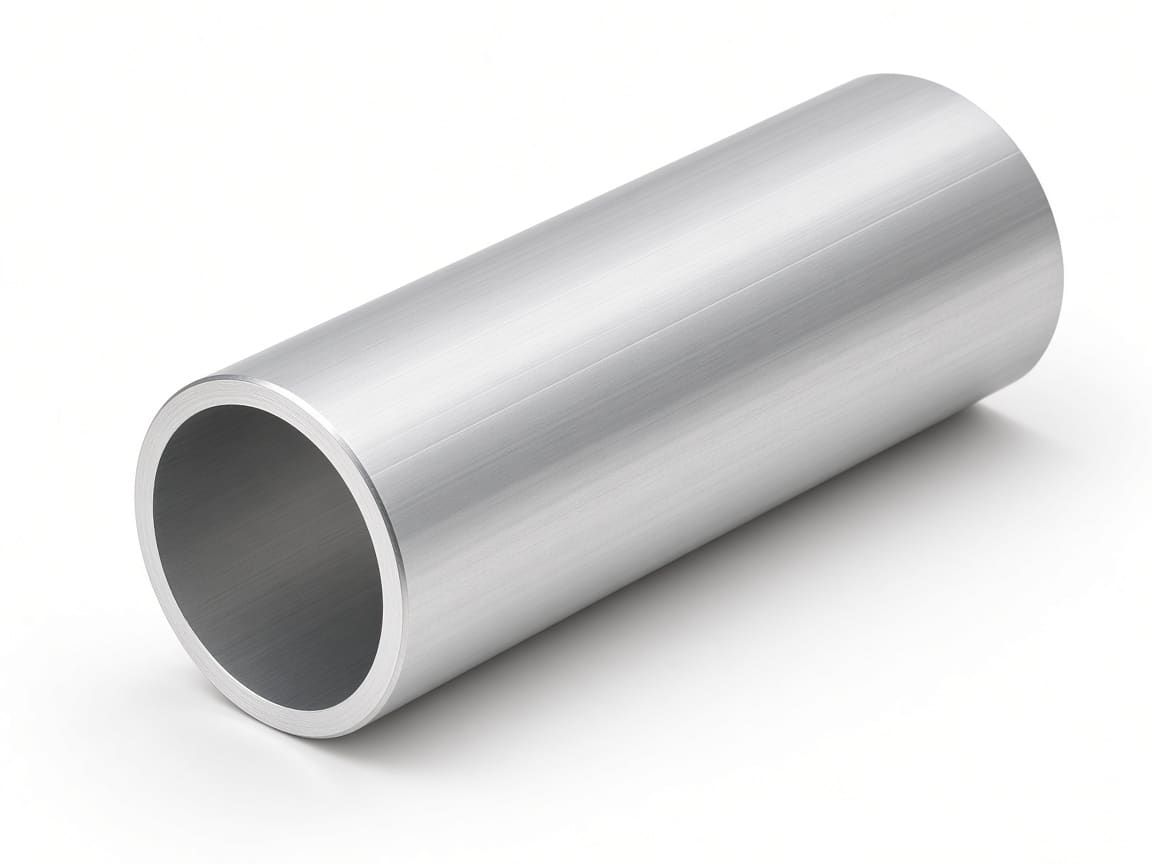
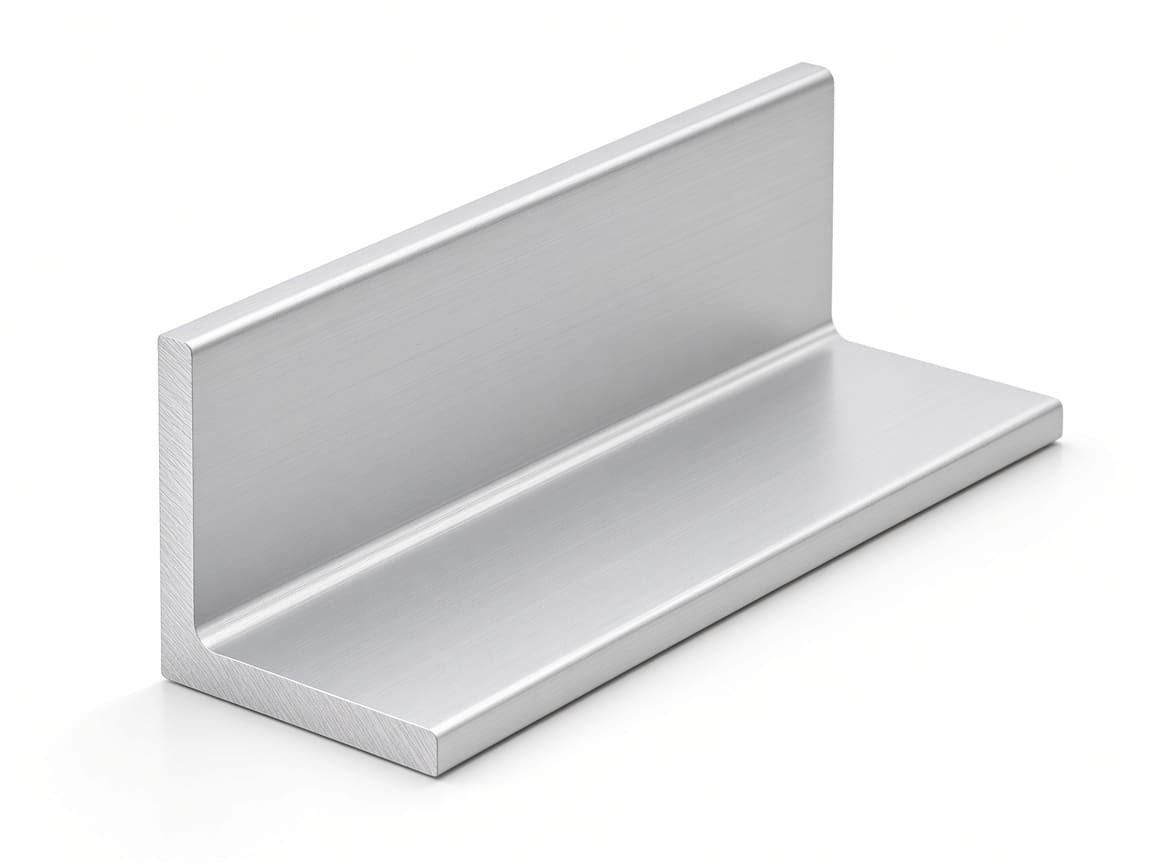
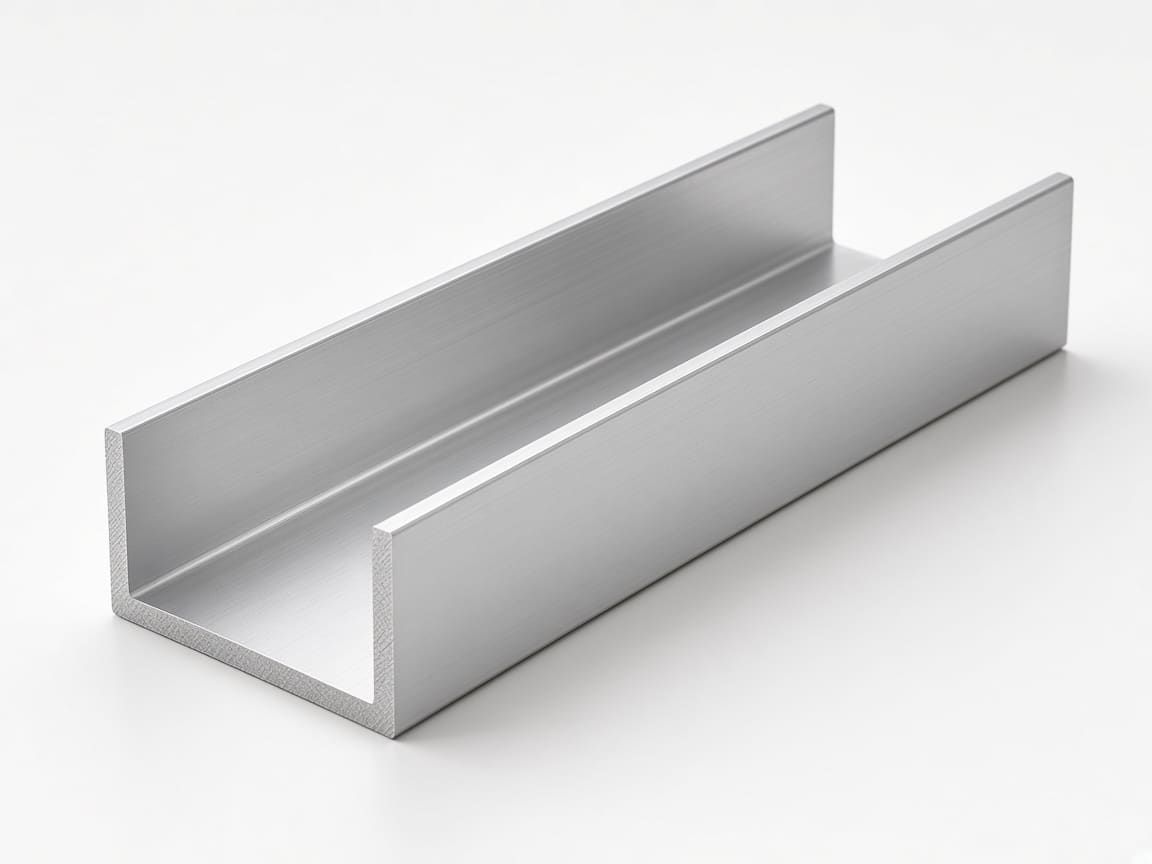
| Shape | Typical uses | Common alloys | Library |
|---|---|---|---|
| Square tube | Frames, furniture, railings, racks | 6063-T5, 6061-T6 | Square tube sizes |
| Rectangular tube | Beams, door frames, trailers, fixtures | 6063-T5, 6061-T6 | Rectangular tube sizes |
| Round tube | Handrails, poles, rollers, frames | 6063-T5, 6061-T6 | Round tube sizes |
| Angle | Brackets, edging, reinforcement | 6063-T5, 6061-T6 | Angle sizes |
| U-channel | Tracks, trims, edge protection | 6063-T5 | Channel sizes |
Other sizes and wall thicknesses on request. Section properties and weights for each size are listed in the profile library.
02Structural tube and seamless tube
Our tubes are extruded on porthole dies. The metal divides around the die's mandrel supports and re-welds inside the die under high pressure, leaving longitudinal seam welds that are sound for structural, architectural and general engineering use.
Seamless tube — extruded from a pierced billet, often then drawn — is specified for pressure and some safety-critical applications. If your drawing calls for seamless tube or a pressure rating, tell us the specification and we will advise.
036063 or 6061 for tube and shapes?
Choose 6063-T5 when appearance, anodizing quality and cost matter most: furniture, railings, frames and trims. Choose 6061-T6 or 6082-T6 when the part carries significant load, will be heavily machined, or needs higher fatigue strength. Our 6061 vs 6063 comparison covers the details.
04Calculating weight
Weight per metre is the cross-sectional area times density: kg/m = area (mm²) × 0.0027 for 6000-series alloys at 2.70 g/cm³. A 40 × 40 × 2 mm square tube has an area of about 304 mm², so it weighs roughly 0.82 kg/m.
Use the aluminum weight calculator for any tube, angle, channel or bar.
05What to send for a quote
The more of this you share, the faster and more accurate the quote. Missing something? Send what you have — we will ask.
- Shape and size (outside dimensions × wall)
- Alloy and temper
- Length (mill length or cut list)
- Tolerance standard, if specified
- Finish
- Machining or bending
- Quantity
06Frequently asked questions
What is the difference between 6063 and 6061 aluminum tube?
6063 has a smoother surface and anodizes better, and it is the usual choice for architectural and furniture tube. 6061-T6 is roughly 30% stronger than 6063-T6 (and well over 50% stronger than 6063-T5) and machines better, so it is used for structural and load-bearing tube.
Are extruded aluminum tubes seamless?
Tubes made on porthole dies — the standard route for structural tube — contain longitudinal seam welds formed inside the die. Seamless tube is made from a pierced billet and is specified for pressure applications.
Which tolerance standard applies to extruded tubes and shapes?
In Europe, EN 755-9 covers profiles and EN 755-7/-8 cover tubes; in North America, ANSI H35.2 tolerances are referenced by ASTM B221. We work to the standard on your drawing or agree specific tolerances.
How do I calculate the weight of an aluminum tube?
Multiply the cross-sectional area in mm² by 0.0027 to get kg per metre. For a round tube, area = π/4 × (D² − d²). Our weight calculator does this for you.
Last updated September 17, 2026 · Reviewed by the CharMax Aluminum engineering team