01Choosing a series
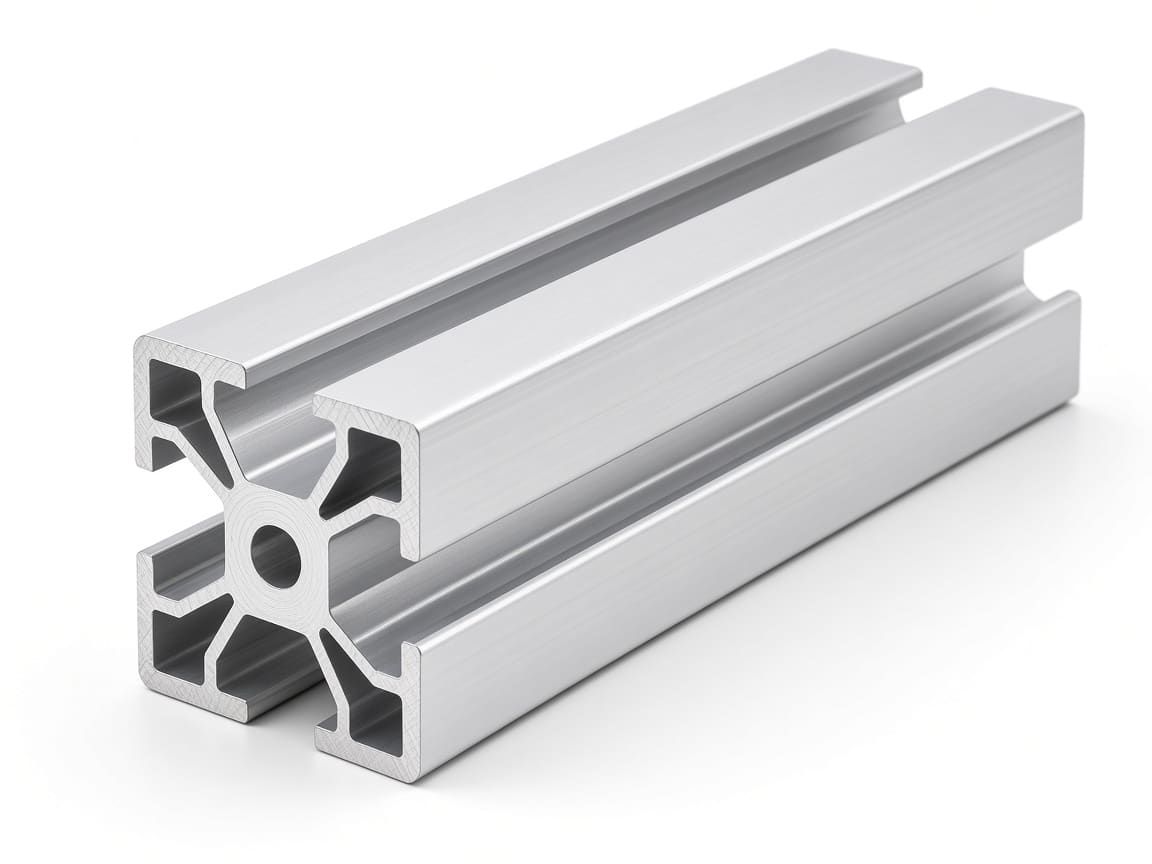
The series is the square module size; the slot width decides which fasteners fit. Larger modules carry more load over longer spans.
| Series | Slot width | Centre bore | Typical uses |
|---|---|---|---|
| 20 | 6 mm | Ø4.2 (M5 tap) | Light guards, 3D printers, jigs, displays |
| 30 | 8 mm | Ø6.8 (M8 tap) | Workstations, light machine guards, enclosures |
| 40 | 8 mm | Ø6.8 (M8 tap) | Machine frames, conveyors, workbenches |
| 45 | 10 mm | Ø8.5 (M10 tap) | Heavy frames, gantries, robot cells |
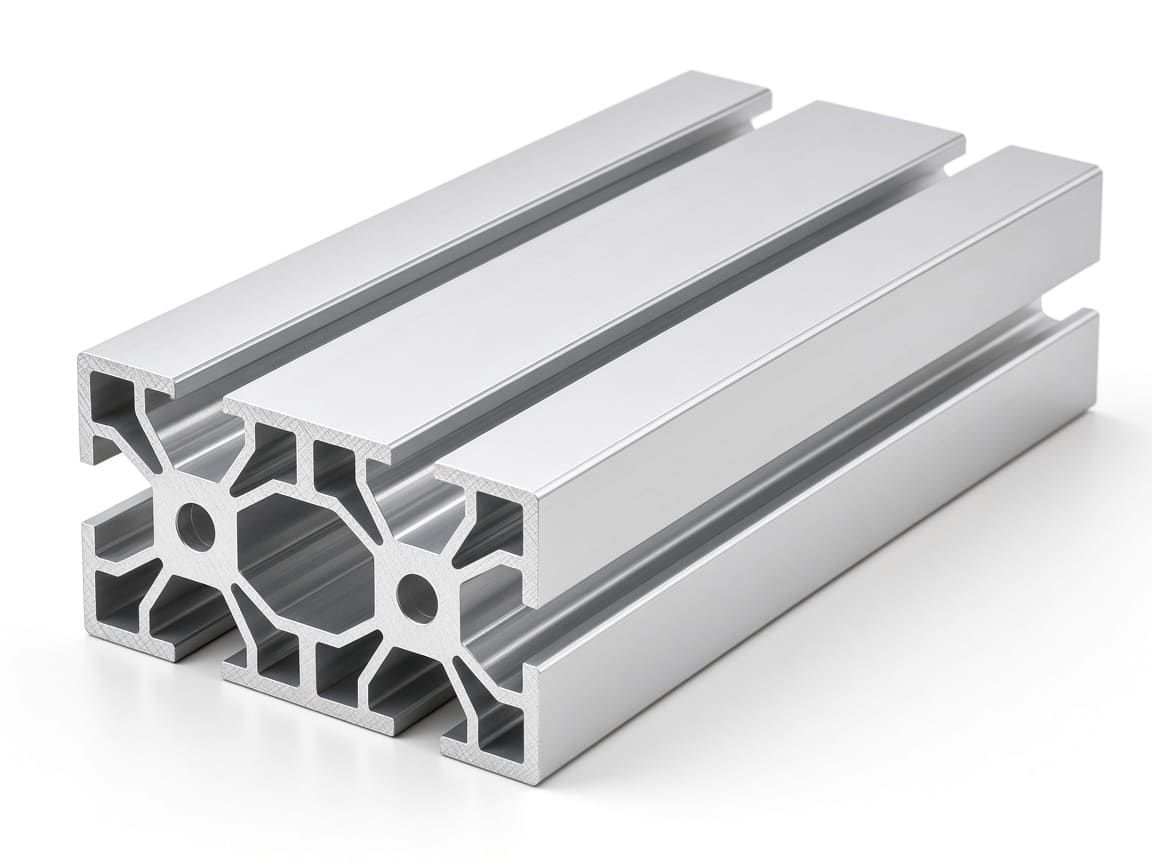
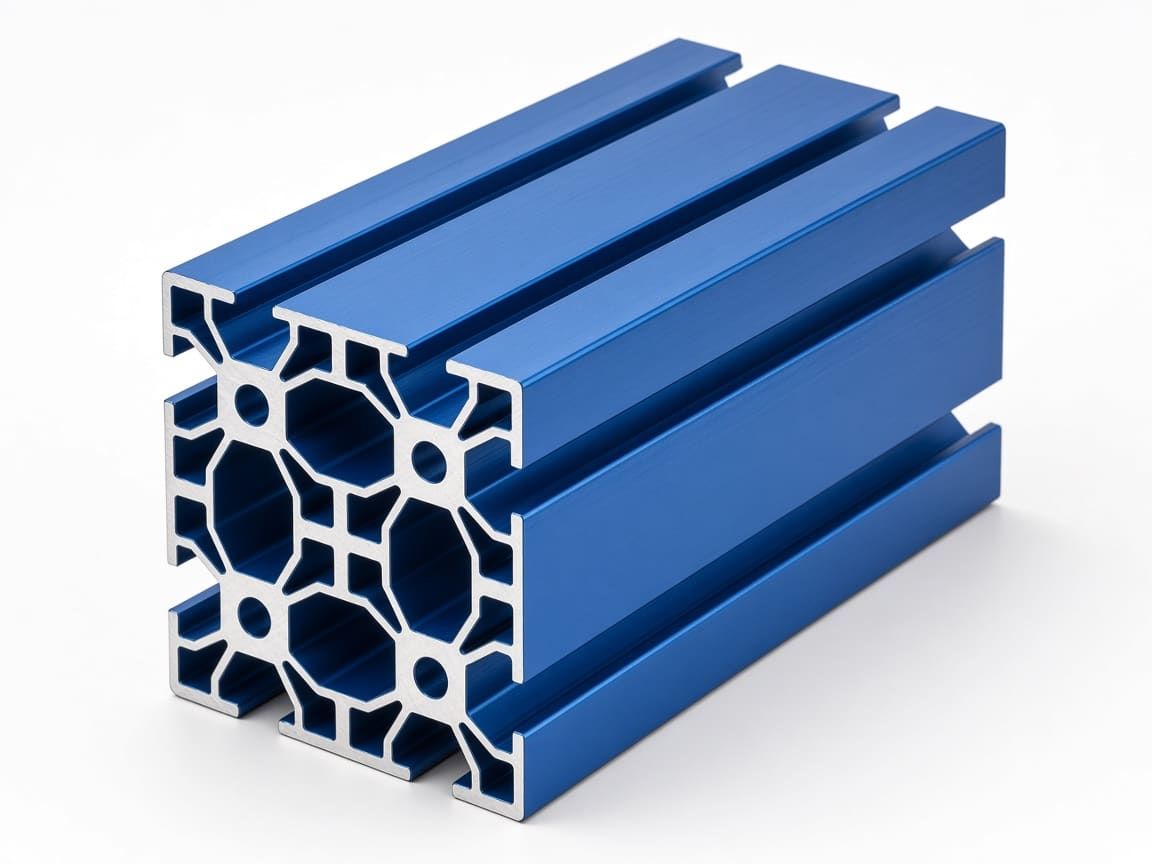
Multiples such as 40×80 and 80×80 add stiffness without changing the fastener system. Full data is in the T-slot profile library.
02Slot geometry and compatibility
Metric framing systems use broadly similar slot conventions, but lip thickness and undercut shape vary between systems — and nuts, brackets and panels only fit when they match. If you are extending an existing installation, send a sample or a drawing of the slot and we will confirm fit before you order.
03Sizing a member for deflection
Frame stiffness usually governs before strength. For a simply supported beam with a central point load, deflection is δ = F·L³ / (48·E·I), where E ≈ 70,000 N/mm² for aluminum and I is the profile's second moment of area.
Example: a profile with I = 8.3 cm⁴ (83,000 mm⁴), spanning 1,000 mm with a 500 N load at mid-span, deflects about 500 × 1000³ / (48 × 70,000 × 83,000) ≈ 1.8 mm. Doubling to a 40×80 section on edge cuts that by roughly a factor of four.
Every profile in the library lists its calculated Ix and Iy.
04Cut and machined to order
- Precision saw cutting to length with square, clean ends
- End tapping of the centre bore for end fasteners
- Counterbored access holes for anchor and cross connectors
- Slot milling, drilling and pivot holes to your drawing
- Labelled, frame-by-frame kitting on request
05What to send for a quote
The more of this you share, the faster and more accurate the quote. Missing something? Send what you have — we will ask.
- Series and profile sizes
- Cut lengths and quantities (a cut list is ideal)
- End tapping and access-hole requirements
- Finish (clear or black anodized)
- Existing system you need to match, if any
06Frequently asked questions
What is the difference between 6, 8 and 10 mm slots?
Slot width sets the fastener size: 6 mm slots typically take M3–M5 hardware on 20 series, 8 mm slots take M4–M8 on 30 and 40 series, and 10 mm slots take M5–M8 or larger on 45 series. Choose the series for load, then match fasteners to the slot.
Are your T-slot profiles compatible with my existing frame?
Metric systems differ in slot details. Send a short sample or a slot drawing and we will confirm compatibility — or extrude a custom section that matches.
How accurate are cut lengths?
Framing profiles are precision saw-cut with square ends suitable for bolted assembly. Tell us your required length tolerance and we will confirm it in the quote.
What finish do T-slot profiles have?
Clear anodizing is standard for wear and corrosion resistance and a clean appearance. Black anodized is available for machine builders who want a darker frame.
Last updated September 17, 2026 · Reviewed by the CharMax Aluminum engineering team