01Our extrusion lines
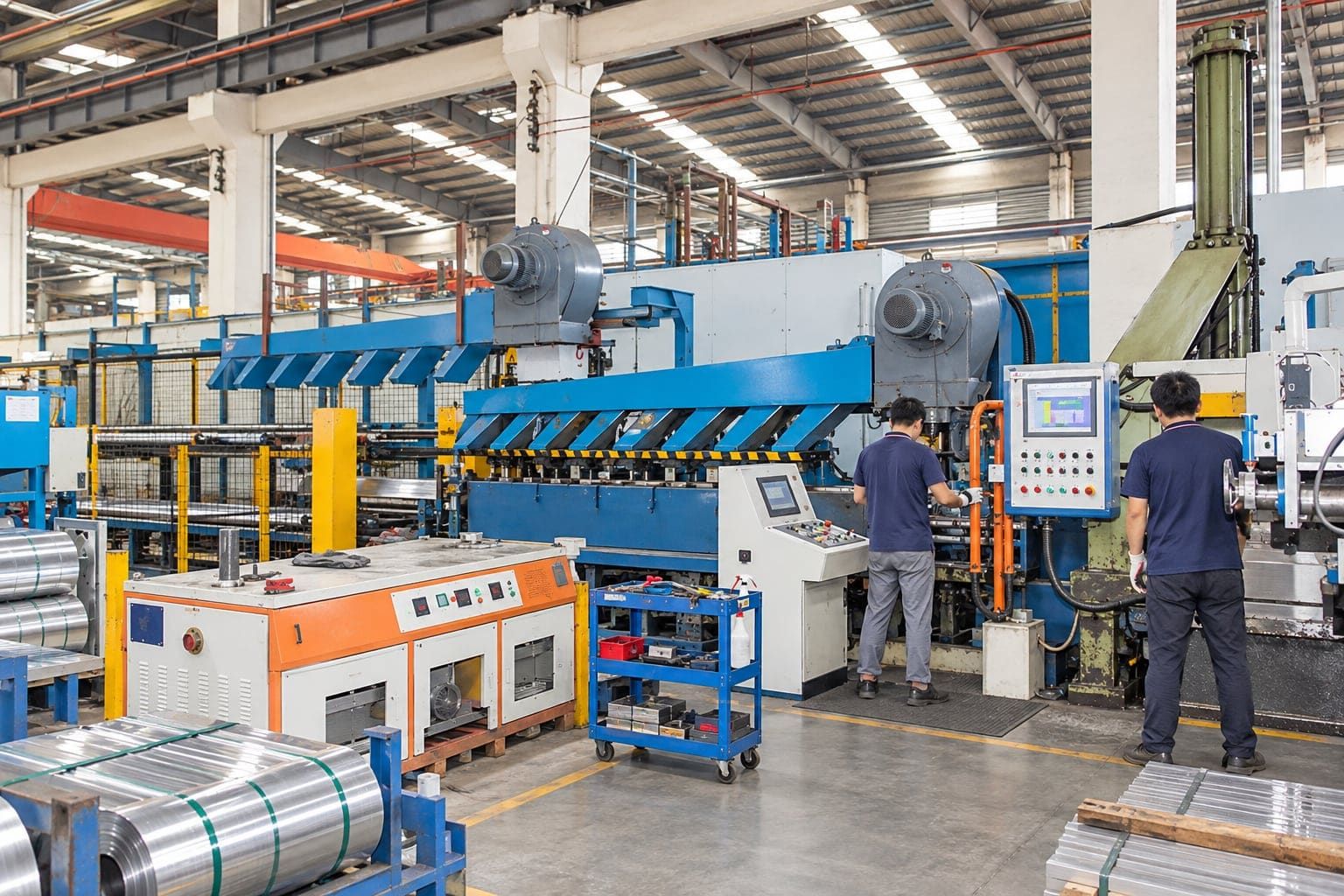
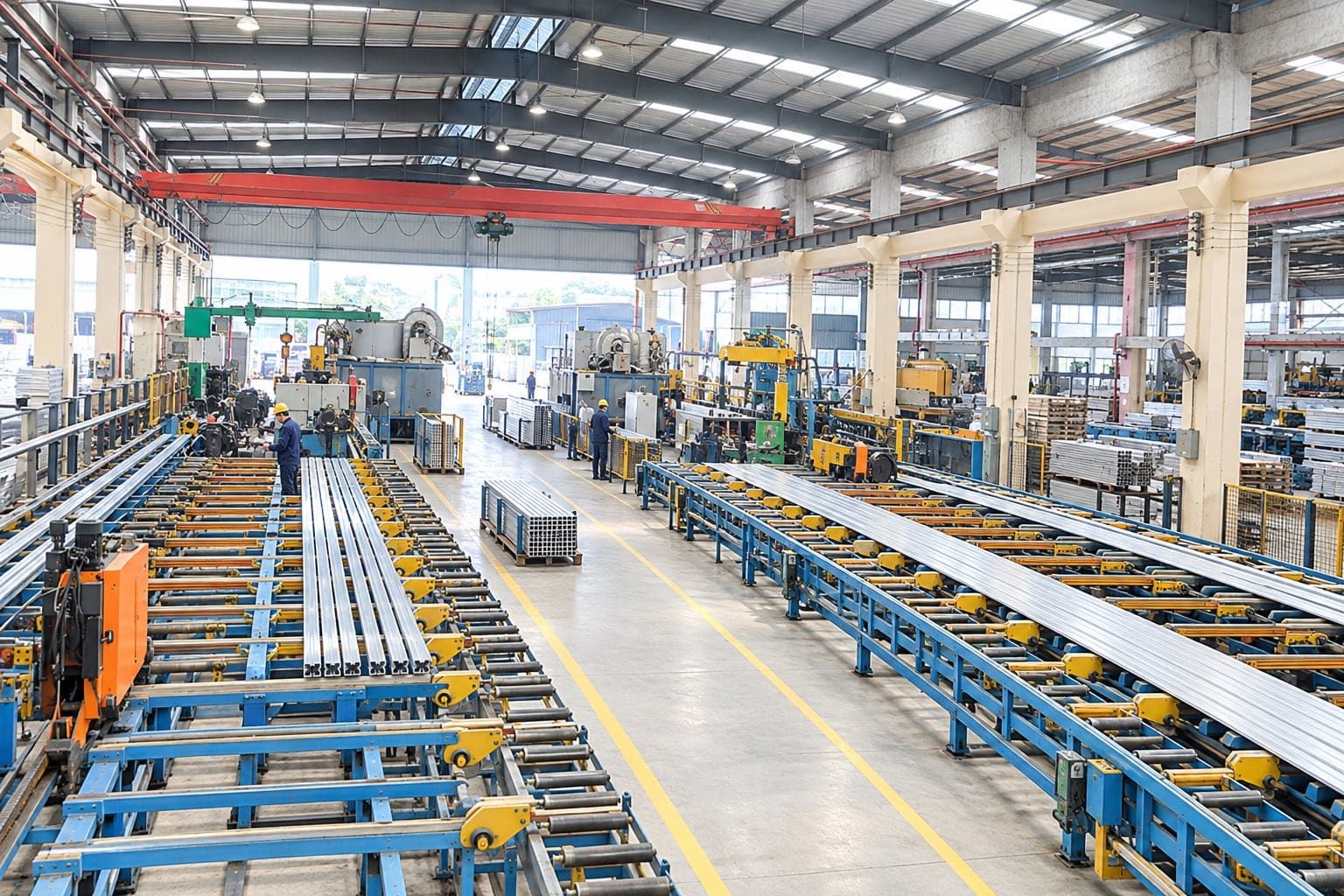
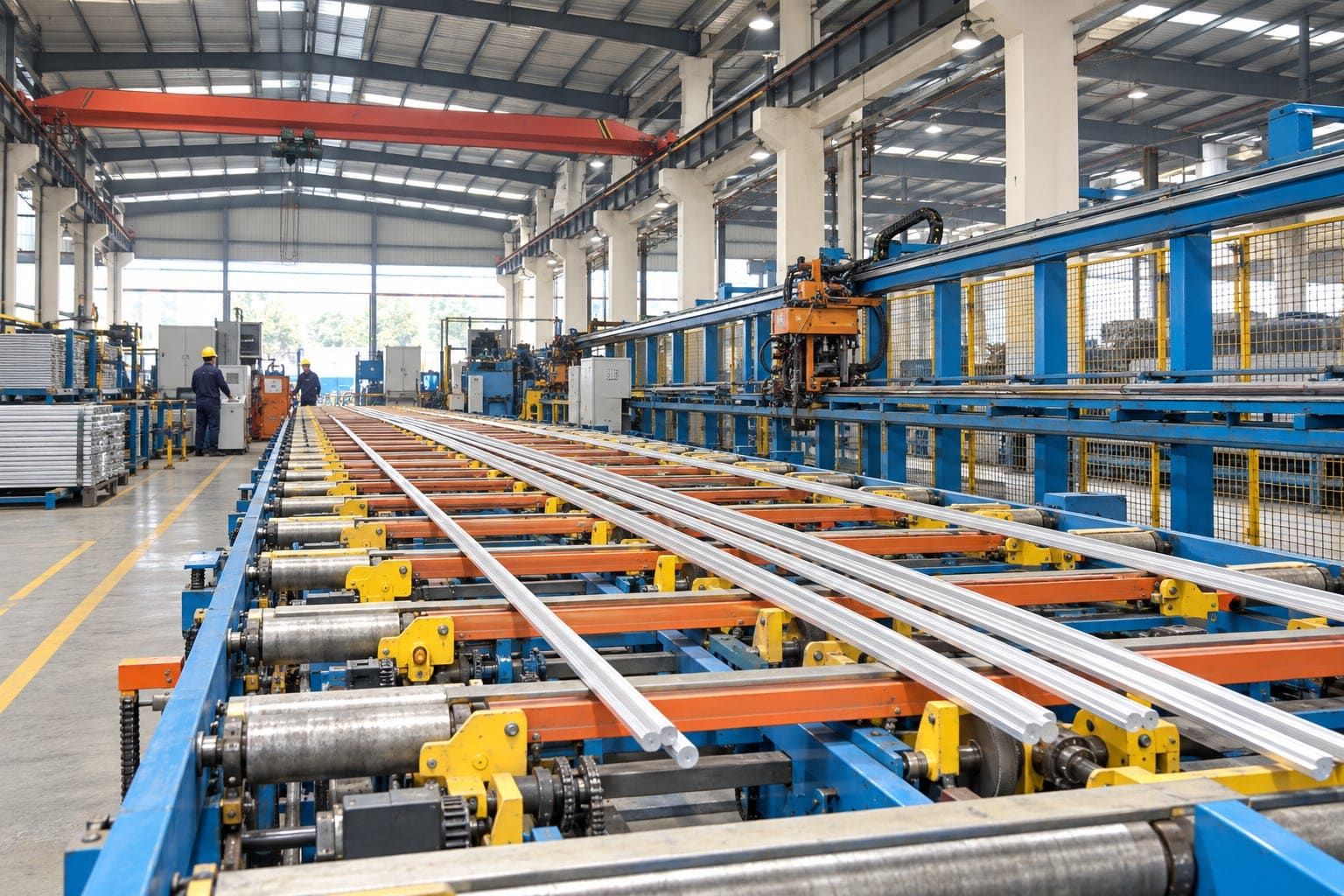
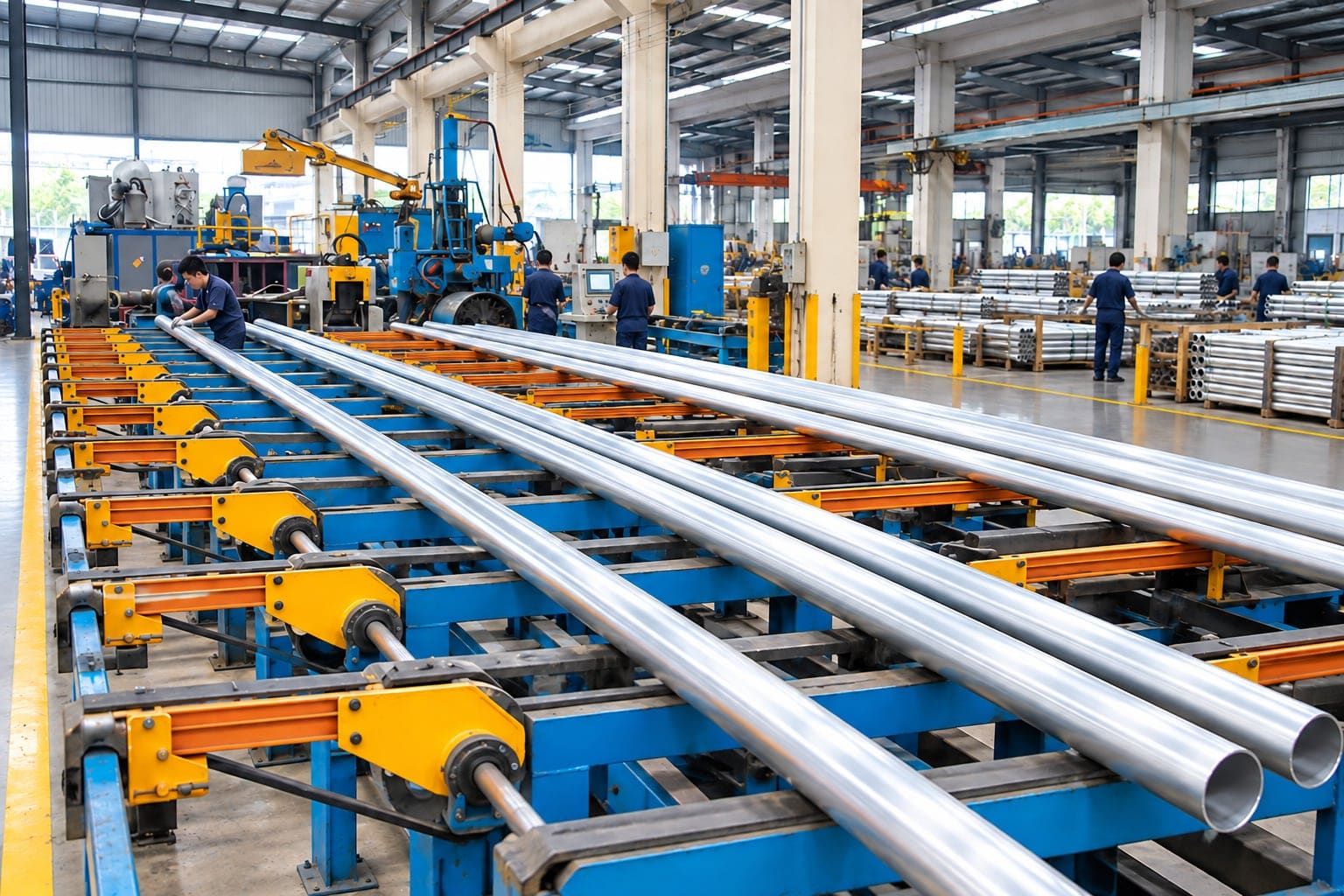
20 extrusion lines with horizontal presses from 600 to 2,000 tonnes let us match each profile to the right press — small presses for fine, precise sections and large presses for wide and heavy ones. Annual capacity is about 30,000 tonnes.
| Press | Presses | Typical work |
|---|---|---|
| 600 t | 5 | Small precise sections: LED, hinges, phone cases, trims |
| 800 t | 2 | Small precise sections: LED, hinges, phone cases, trims |
| 1,000 t | 5 | Medium profiles: enclosures, heat sinks, tubes, scooter parts |
| 1,350 t | 2 | Medium profiles: enclosures, heat sinks, tubes, scooter parts |
| 2,000 t | 2 | Large and heavy sections: wide heat sinks, formwork, structural profiles |
See the full factory and equipment list.
02The extrusion line, step by step
Billet heating
Cast billets are heated to roughly 450–500 °C — hot enough to flow, below the point where surface quality suffers.
Extrusion
A hydraulic ram pushes the billet through the preheated die. The profile emerges at a controlled speed set by alloy and section.
Press quench
Air or water mist cools the profile at the press exit, locking in the solution-treated structure for later aging.
Stretching
Each length is stretched slightly to straighten it and relieve residual stress.
Cutting
Profiles are saw-cut to mill lengths or directly to customer lengths.
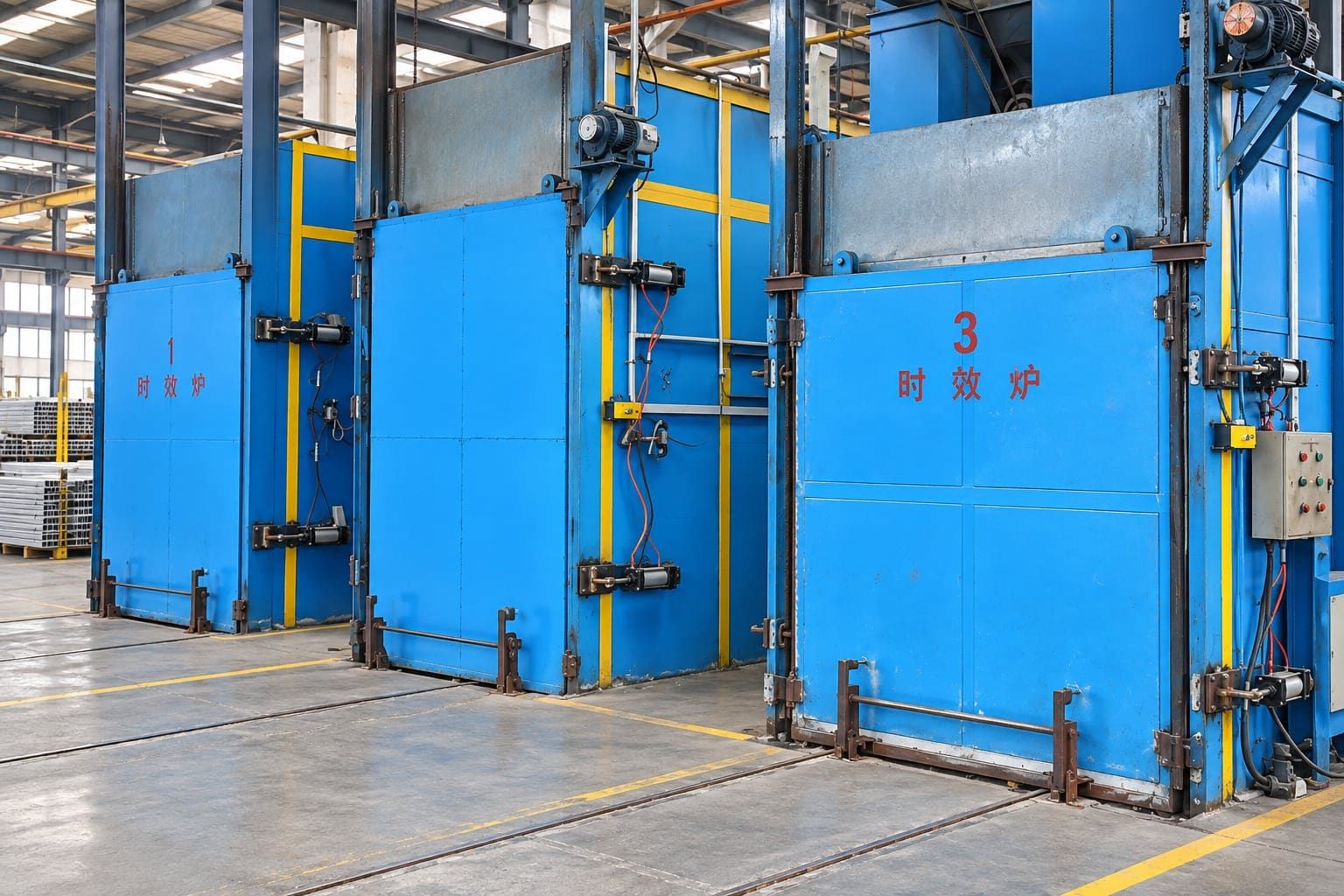
Aging
Artificial aging in ovens precipitates hardening phases and brings the profile to T5 or T6.
The extrusion process guide explains each stage in more depth.
03Tempers we produce
| Temper | How it is achieved | Typical use |
|---|---|---|
| T4 | Solution treated and naturally aged | Parts that will be formed or bent before final aging |
| T5 | Press quenched and artificially aged | Architectural, LED, heat sinks, framing (6063) |
| T6 | Solution treated and artificially aged for full strength | Structural and machined parts (6061, 6082, 6005A) |
| T66 | Solution treated and aged with special process control for properties above T6 | 6060 and 6063 parts that need extra strength without changing alloy |
More detail in aluminum temper designations explained.
04Process controls
- Billet chemistry verified against the alloy specification for each cast lot
- Extrusion temperature and speed set per alloy and die, recorded for repeat runs
- First-off profile measured against the drawing before a run continues
- Hardness tested after aging to confirm temper
- Surface inspected for die lines, pick-up and handling marks on cosmetic faces
See the full inspection plan on our quality page.
05Frequently asked questions
What is aluminum extrusion?
Aluminum extrusion is a hot-forming process that pushes a heated aluminum billet through a steel die to produce a long profile with a constant cross-section, which is then cooled, straightened, cut and heat-treated.
What temperature is aluminum extruded at?
Billets for 6000-series alloys are typically heated to around 450–500 °C. The exact temperature depends on the alloy, the die and the profile's surface requirements.
What is the difference between T5 and T6?
T5 profiles are quenched at the press and then artificially aged; T6 profiles are fully solution heat treated before aging, giving higher strength. For 6063, press quenching can reach T6 properties when the quench is fast enough.
Last updated September 17, 2026 · Reviewed by the CharMax Aluminum engineering team