01Components for electronics
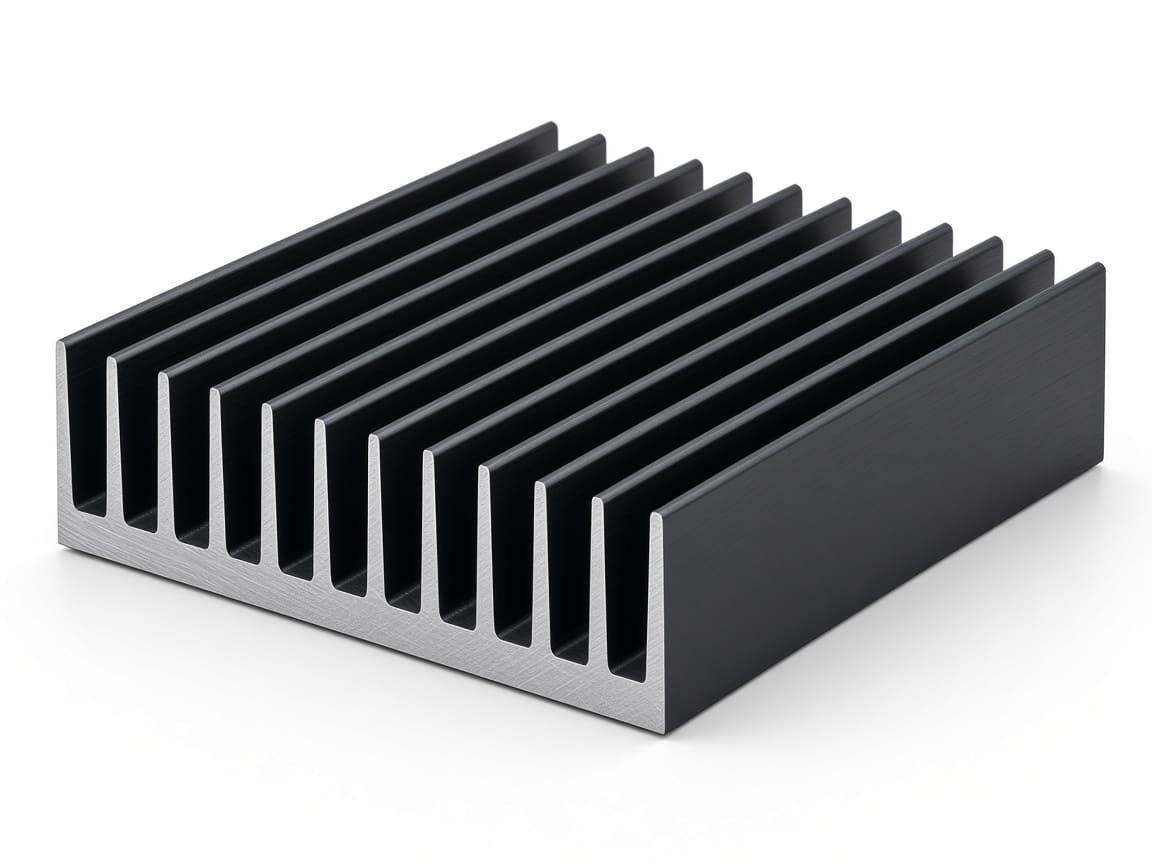
Heat sinks
Straight-fin profiles machined flat at the contact face. Heat sinks.
Enclosures
Hollow and clamshell housings with PCB guides. Enclosures.
LED profiles
Channels that cool strips and hold diffusers. LED profiles.
Power-module bases
Thick-base extrusions for IGBT and MOSFET modules.
Phone cases, flashlights & cameras
Cosmetic, precision profiles for consumer devices. Consumer electronics profiles.
Street & high-bay lighting
Heat-sinking housings for street lights and industrial & mining lamps.
02Engineering priorities
- Thermal path. Contact-face flatness and interface area matter as much as fin area.
- Electrical contact. Anodizing insulates — mask grounding points and conductive interfaces.
- EMC. A continuous aluminum body shields well when joints and panels bond electrically.
- Cosmetics. Visible housings need controlled die lines, handling care and consistent anodizing.
03From prototype to production
Electronics programmes often start with a few hundred units and ramp quickly. Extrusion suits this curve: die cost is modest, prototypes come from the production die, and unit cost falls with volume without re-tooling. Standard heat sink sections from our profile library avoid die cost entirely for early builds.
04Frequently asked questions
Why is 6063 aluminum used for heat sinks and enclosures?
6063 conducts heat at roughly 200–209 W/m·K, extrudes thin fins and fine details, and anodizes to an even cosmetic finish — the combination electronics housings need.
Is extrusion or die casting better for electronics housings?
Extrusion suits constant cross-sections, has lower tooling cost and better thermal conductivity. Die casting suits closed 3D shapes at very high volumes. Many products combine an extruded body with cast or machined end caps.
Can you mask areas during anodizing?
Yes. Grounding points, contact faces and threads can be masked, or machined after anodizing, so they stay conductive.
Last updated September 17, 2026 · Reviewed by the CharMax Aluminum engineering team