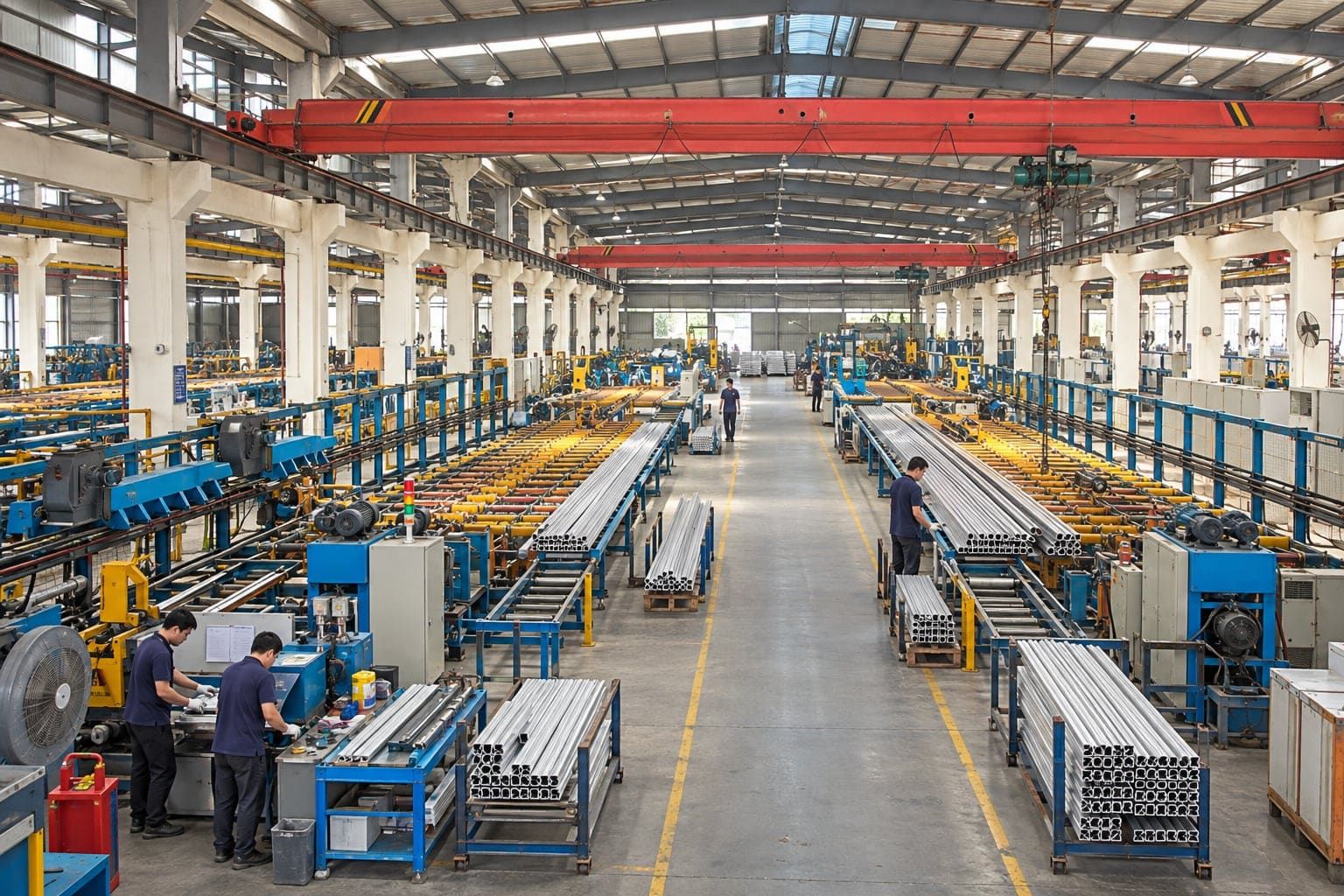
01Operations
Precision cutting
Saw cutting to length and angle, with tight length tolerances for assembly.
CNC machining
Milling, drilling and tapping of features across and along the profile.
Punching
Die punching of holes and slots for high-volume parts.
Bending
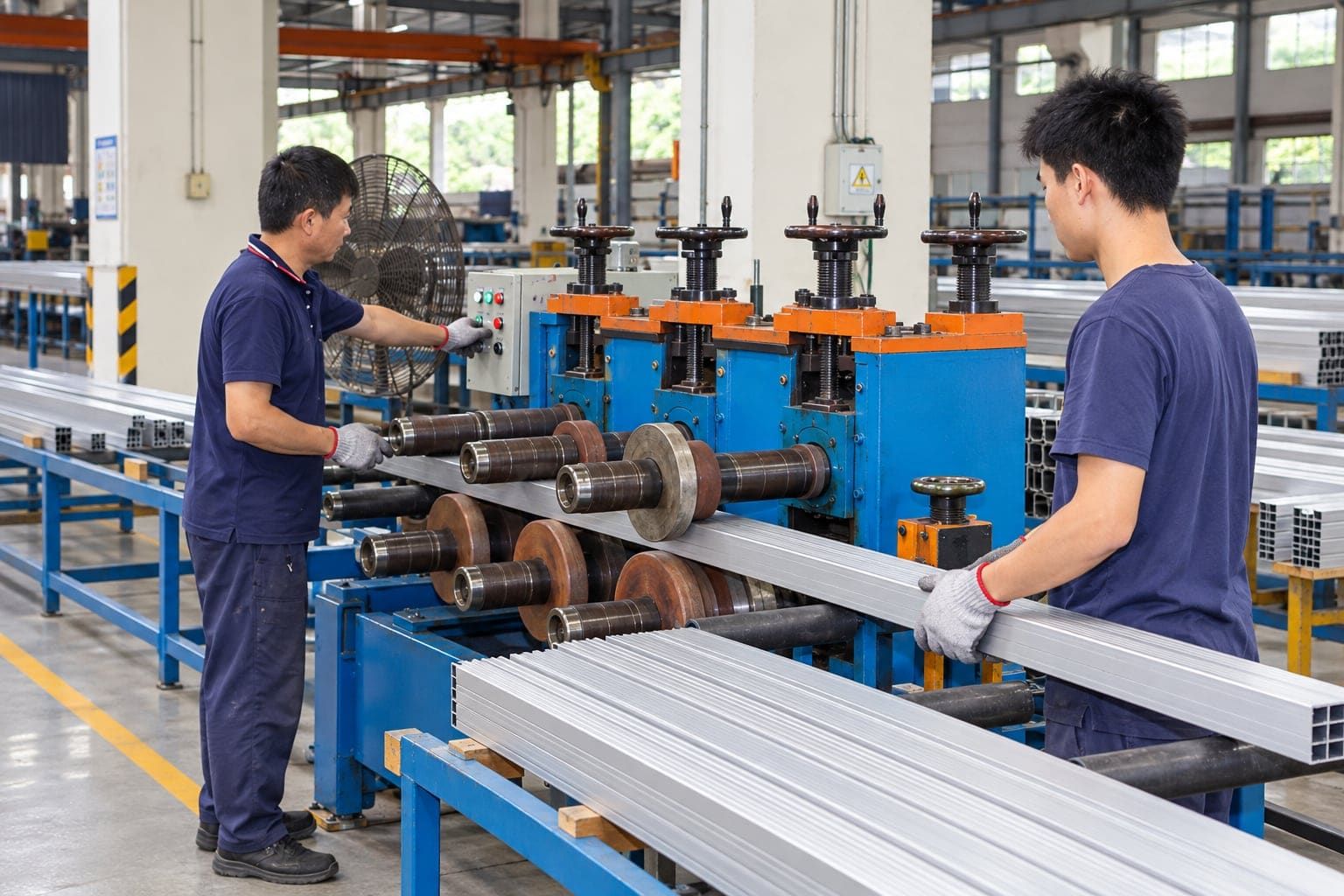
Profiles and tubes bent to radius, often in T4 before final aging.
Deburring & cleaning
Edges finished before anodizing or coating.
Assembly
Fasteners, inserts, gaskets and sub-assemblies fitted and packed.
02Machined tolerances vs extruded tolerances
The extruded section follows extrusion tolerance standards such as EN 755-9 — ideal for most features, but not for bearing seats or precision datums. Machined features hold much tighter tolerances. The most economical parts put precision only where it is needed and let the extrusion do the rest.
03Machining before finishing
Machining is done before anodizing or powder coating so every surface is protected and color stays even. Where a surface must stay conductive or dimensionally exact — threads, grounding points, bearing bores — we mask it or machine it after finishing.
04Frequently asked questions
Why machine an extrusion instead of machining from solid bar?
An extrusion already has most of the final shape, so machining removes far less material and takes less time. For parts with a constant section plus a few features, extrusion plus machining is usually much cheaper than machining from block.
Can profiles be bent after extrusion?
Yes, within limits set by the section, alloy and temper. Tight bends are often done in T4 temper, with artificial aging afterwards to reach final strength.
Do you assemble parts?
Yes — fasteners, inserts, gaskets and simple sub-assemblies can be fitted and packed per kit.
Last updated September 17, 2026 · Reviewed by the CharMax Aluminum engineering team