01Why extrude a heat sink
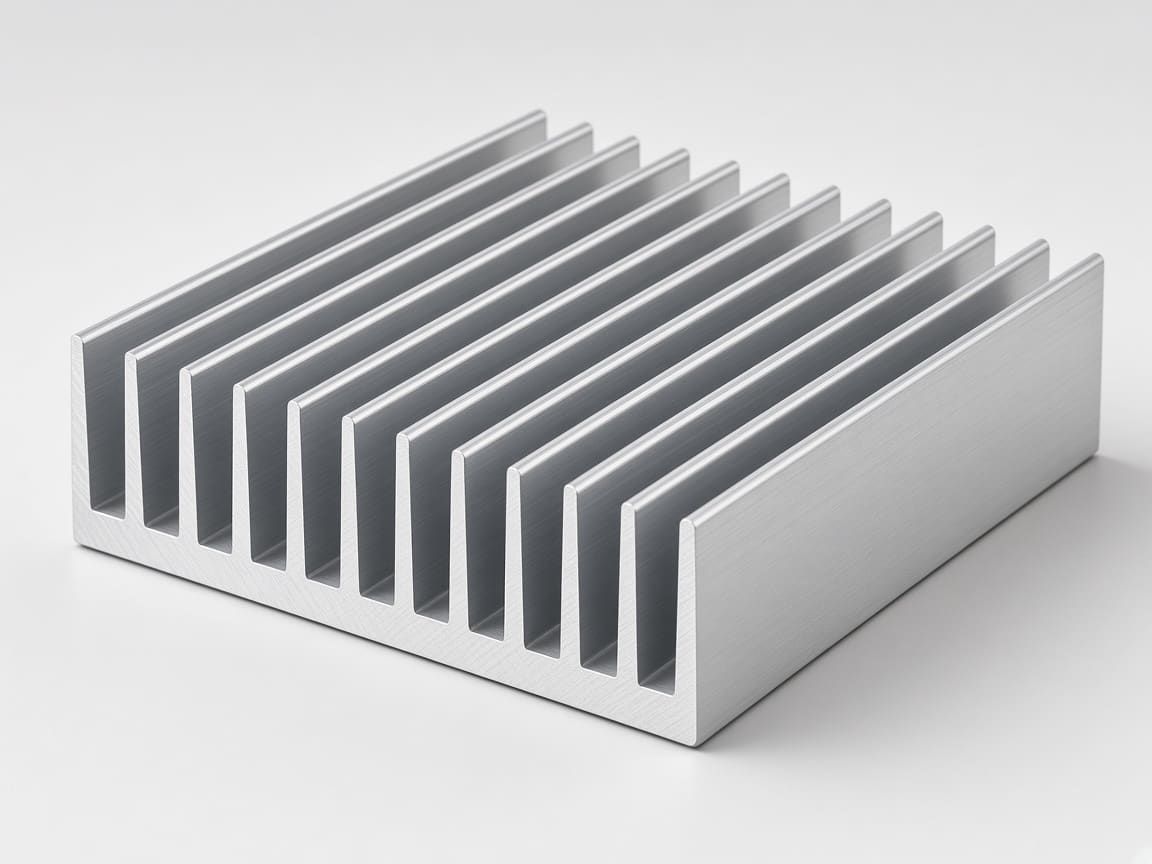
Extrusion is the most economical way to make straight-fin heat sinks. One die produces a continuous profile that can be cut to any length, so the same section serves a 50 mm driver and a 500 mm power module. Wrought 6063 also conducts heat about twice as well as common die-casting alloys.
| Method | Fin geometry | Tooling | Conductivity | Best for |
|---|---|---|---|---|
| Extruded 6063 | Straight fins in one direction | Low — extrusion die | ≈ 200 W/m·K | LED, power supplies, drives, telecom |
| Die cast (ADC12 / A380) | 3D fins, pins, integrated housings | High — steel mold | ≈ 90–100 W/m·K | High-volume housings with fins |
| Bonded or skived fin | Tall, thin, dense fins | Moderate | ≈ 200 W/m·K (Al) or higher (Cu) | High heat flux, forced air |
| Machined from plate | Any | None | ≈ 150–200 W/m·K | Prototypes and very low volumes |
Conductivity values are typical published figures for the material; the finished heat sink's thermal resistance depends on geometry, airflow and interface.
02Fin design rules of thumb
- Mind the fin ratio. Very tall fins with narrow gaps are hard to extrude because the die tongues between fins become fragile. We will tell you what ratio your section can run at.
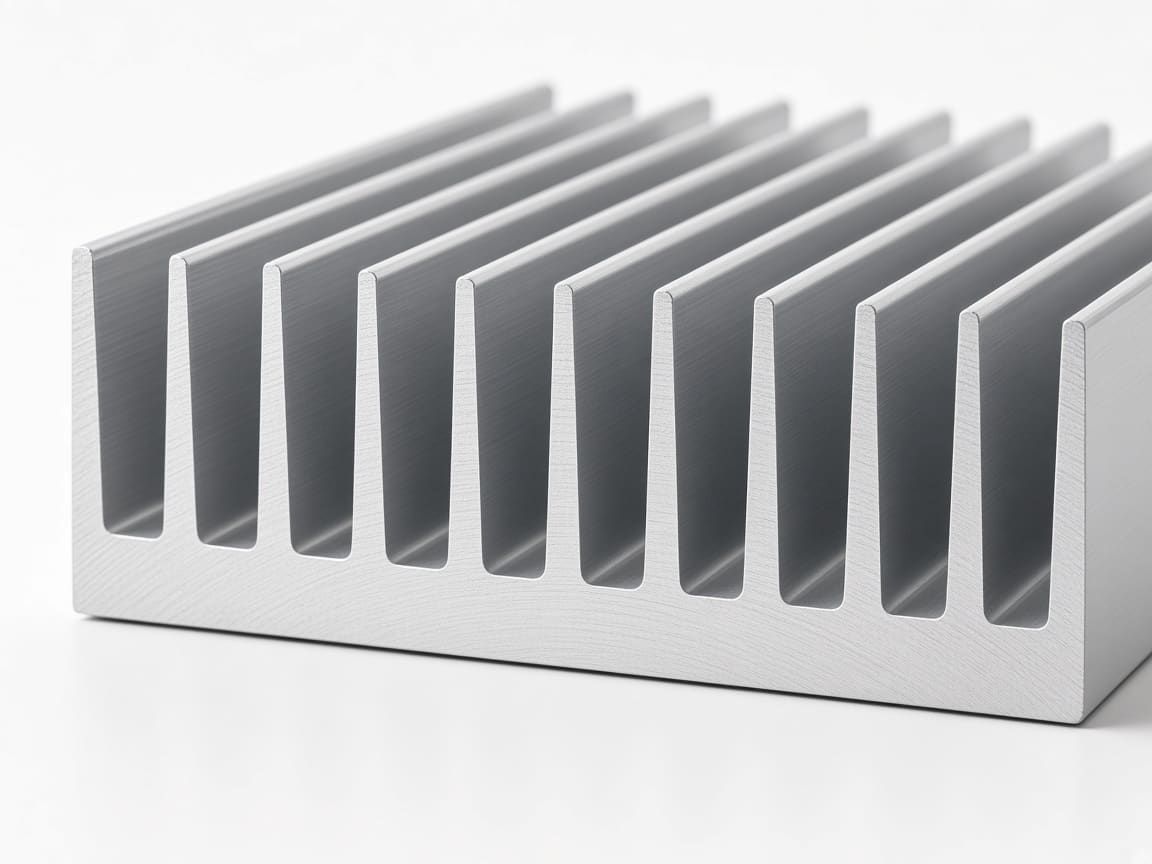
- Taper the fins. A thicker root and thinner tip improves both extrudability and heat conduction along the fin.
- Size the gap to the airflow. Natural convection needs wider gaps than forced air, because the warm boundary layers on neighbouring fins must not merge.
- Spread the heat first. A thicker base under a concentrated source reduces spreading resistance before the fins ever see the heat.
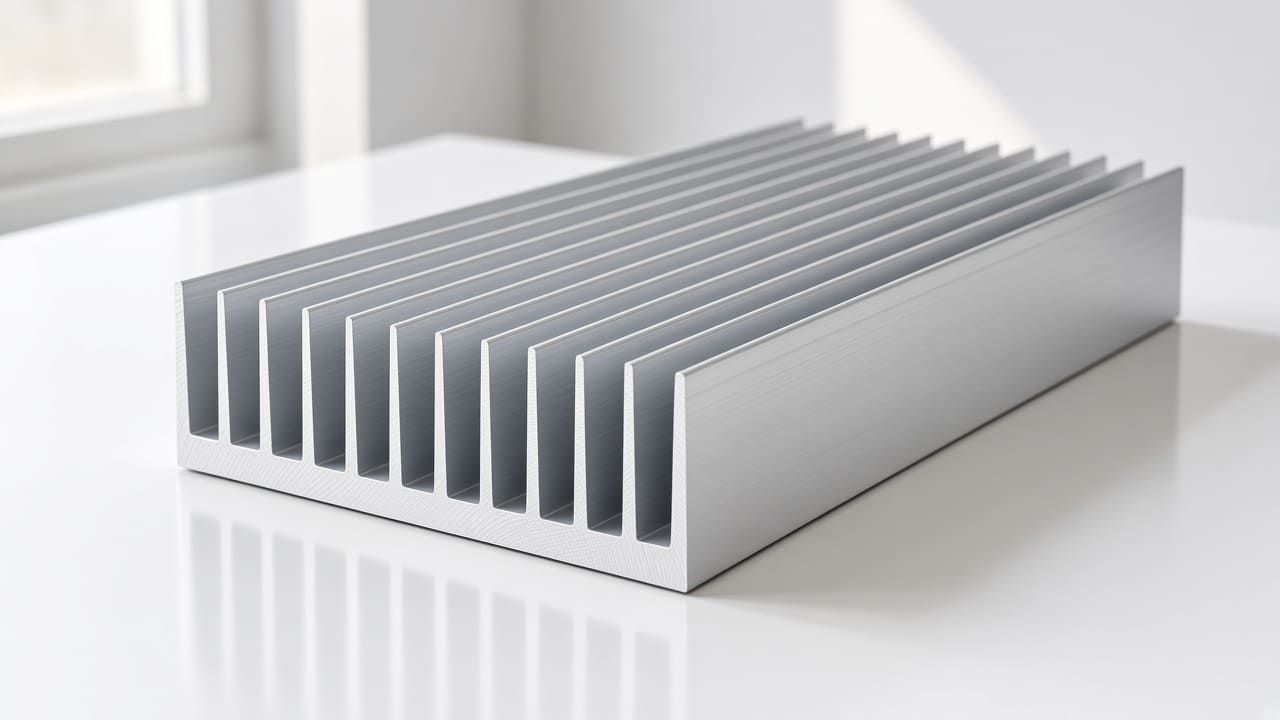
- Orient for convection. In passive designs, vertical fins let warm air rise freely along the channels.
The extruded heat sink design guide covers these trade-offs in detail.
03Machining and finishing
The contact face is where heat sinks win or lose. We face-mill mounting areas for flatness, then drill and tap mounting holes, counterbores and clip slots.
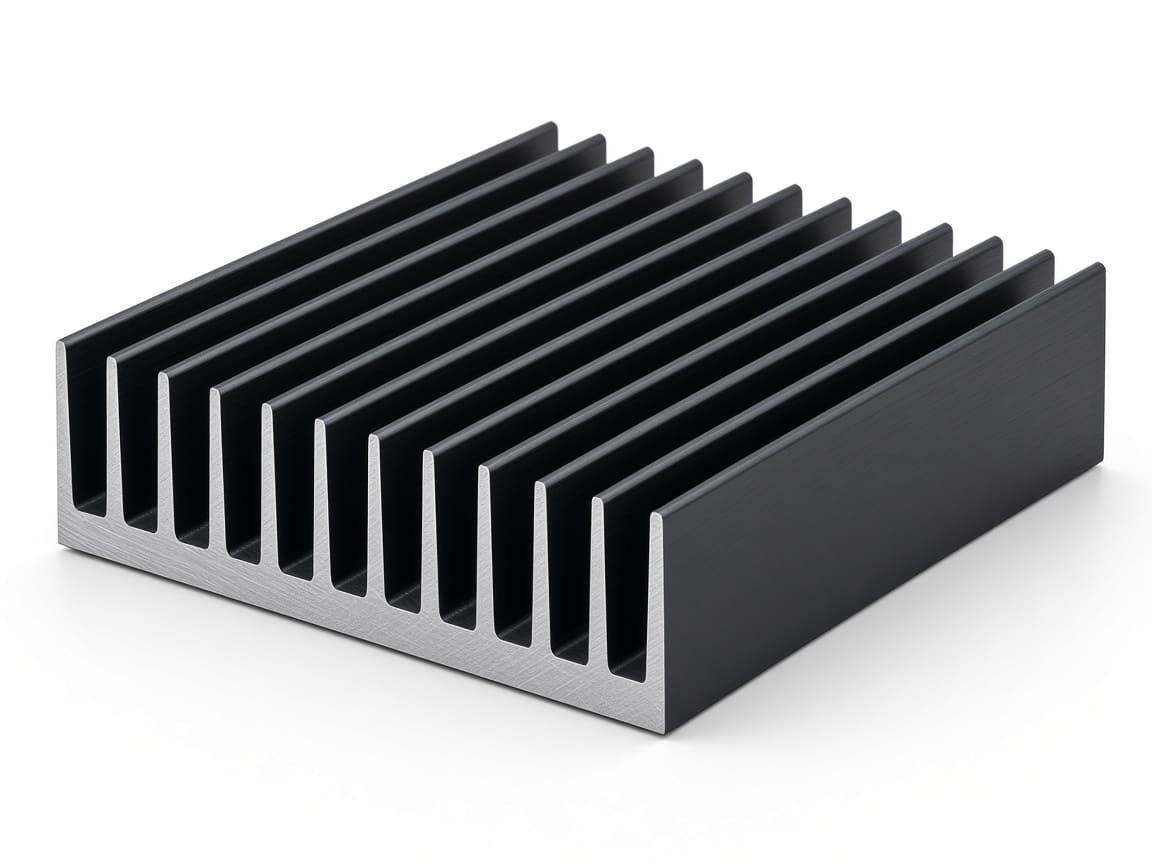
Black anodizing raises surface emissivity, which helps radiation in natural-convection designs. Clear anodizing protects against corrosion with a bright metallic look. Anodic layers are electrically insulating, so areas that must conduct — grounding points or component contact — are masked or machined after anodizing.
04Where extruded heat sinks are used
- LED luminaires and drivers
- Street lights and industrial & mining (high-bay) lights
- Power supplies and inverters
- Motor drives and VFDs
- Security camera housings
- Telecom and networking hardware
- Audio amplifiers
- EV and battery chargers
Browse standard sections in the heat sink profile library.
05What to send for a quote
The more of this you share, the faster and more accurate the quote. Missing something? Send what you have — we will ask.
- Power to dissipate and maximum component or case temperature
- Component footprint and mounting method
- Airflow: natural or forced, direction and velocity
- Available envelope (width, height, length)
- Flatness requirement for the contact face
- Finish (clear or black anodized, masked areas)
- Machining drawing for holes and cut-outs
- Quantity per release and annual volume
06Frequently asked questions
Which aluminum alloy is best for extruded heat sinks?
6063, in T5 or T6 temper. It has the highest thermal conductivity of the common extrusion alloys (about 200–209 W/m·K) and extrudes the thin fins heat sinks need. 6061 conducts less heat (about 167 W/m·K) and is used only when the heat sink is also a structural part.
Does anodizing reduce heat sink performance?
The anodic layer is thin and has little effect on convection, and black anodizing actually improves radiation. At the component interface, however, the layer adds resistance and insulates electrically, so contact faces are usually masked or machined after anodizing.
What is the largest heat sink you can extrude?
The limit is set by the circumscribing circle of the press and the fin ratio. Send your envelope and we will confirm feasibility — very wide heat sinks can also be made from two interlocking extrusions.
Do you have standard heat sink profiles?
Yes. Standard sections in our profile library avoid die cost entirely and can be cut and machined to your length and hole pattern.
Last updated September 17, 2026 · Reviewed by the CharMax Aluminum engineering team